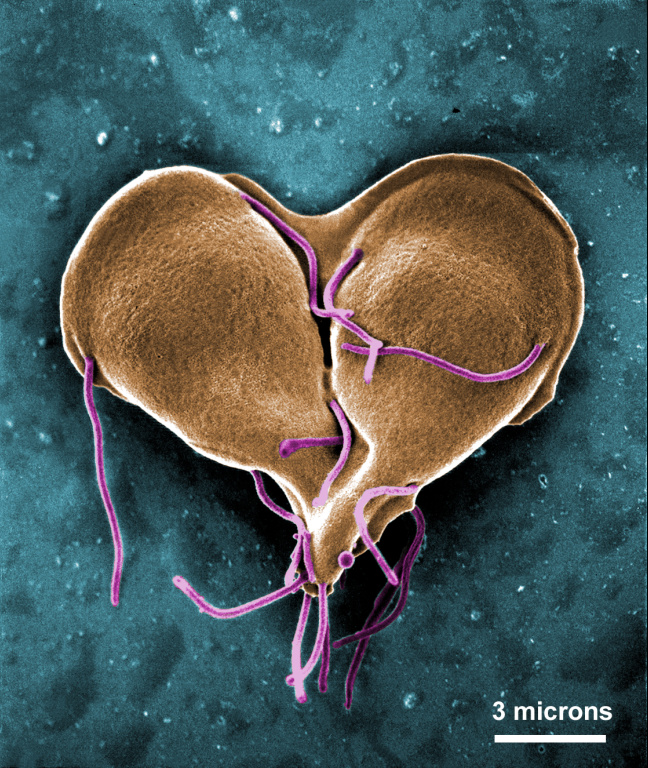
Researchers have uncovered how a particular strain of a diarrhoea-causing parasite managed to infect more animal species, offering new insights into how parasitic infections emerge and spread to people.
The WEHI-led study has revealed a genetic shortcut that may help Giardia duodenalis and many other parasites jump to new hosts at the cost of long-term survival. The findings may also help explain how parasites evolve drug resistance, with implications for treatment strategies worldwide.
Understanding these dynamics could inform public health surveillance and guide efforts to anticipate zoonotic spillover and resistance before they become entrenched.
At a glance
A WEHI-led team discovered that an asexual Giardia lineage infects a broader range of hosts than its sexual counterpart, but accumulates harmful mutations that lead to extinction.
Giardiasis remains a significant global health burden, causing chronic diarrhoea and malnutrition, particularly in children.
The same evolutionary trade-offs that enable host switching may also underpin drug resistance, highlighting the need for smarter treatment and monitoring strategies.
A global health threat
Giardiasis interferes with nutrient absorption in the small intestine, driving chronic diarrhoea and growth delays. Its hardy cysts persist in water and the environment, making outbreaks difficult to control.
There are up to 600,000 cases of giardiasis in Australia each year, and more than 280 million cases worldwide. The disease has a disproportionately high impact on children in poorer communities and in remote Indigenous communities in Australia.
Study lead Professor Aaron Jex said that when a parasite expands from a single host to many, the public health task gets far harder.
“By pinpointing the genetic patterns behind this shift, we can better anticipate where and how future infections may emerge and design smarter surveillance to stop them,” he said.
Survival of the ‘fit-ish’
The new study, published in Nature Communications, has revealed a surprising evolutionary twist: an asexual lineage of Giardia that managed to infect a wider range of hosts than its sexual ancestor, despite being on a genetic path toward extinction.
The study found that the same genetic shortcut may also occur in many other zoonotic parasites.
Giving up sex may have been the key to allowing the parasite to became a generalist – able to infect pets, livestock, wildlife and humans.
This ability to jump between hosts, known as host switching, is a key factor in how new infections emerge in people. But the shortcut comes at a cost: because these parasites don’t exchange genetic material, harmful mutations build up over time, leading to eventual collapse.
“It’s not survival of the fittest – it’s survival of the ‘fit-ish’,” said Prof Jex.
“That brief advantage lets the parasite spread to new hosts before genetic problems catch up.”
Hidden pathway to drug resistance
This same principle may also help explain how parasites evolve drug resistance.
Mutations that help them survive treatment often make them weaker overall. In parasites that reproduce sexually, these mutants are quickly outcompeted. But in asexual parasites they persist, creating a window for resistant strains to spread.
“Our findings show that when sex stops, selection becomes inefficient,” Prof Jex said.
“That same inefficiency could allow drug-resistant parasites to linger and spread.”
Why parasite sex matters
Sex isn’t just about reproduction – it’s about survival.
Sexual recombination allows parasites to stay competitive in the evolutionary “arms race” with their hosts. When that stops, short-term gains like switching to new hosts come at the cost of long-term viability.
The team’s findings raise new questions about how similar mechanisms might influence drug resistance and the emergence of other parasitic diseases.
In the future the team will explore whether the same genetic shortcuts that allow host switching also enable resistant strains to persist, and how this knowledge can guide treatment strategies and surveillance systems to prevent outbreaks before they start.
The study, "Host range expansion of asexual parasite can be explained by loss of adaptions in Muller’s Ratchet” is published in Nature Communications (DOI: 10.1038/s41467-025-65843-4).
About us:
About WEHI (Walter and Eliza Hall Institute of Medical Research)
WEHI is where brilliant minds collaborate and innovate to make life-changing scientific discoveries that help people live healthier for longer. Our medical researchers have been serving the community for more than 100 years, making transformative discoveries in cancer, infection and immunity, and lifelong health. WEHI brings together diverse and creative people with different experience and expertise to solve some of the world’s most complex health problems. With partners across science, health, government, industry, and philanthropy, we are committed to long-term discovery, collaboration, and translation. At WEHI, we are brighter together.
Find out more at www.wehi.edu.au
Contact details:
M: +61 475 751 811
E: communications@wehi.edu.au